Sunflower Seed Crusted Salmon with Roasted Asparagus
Introduction
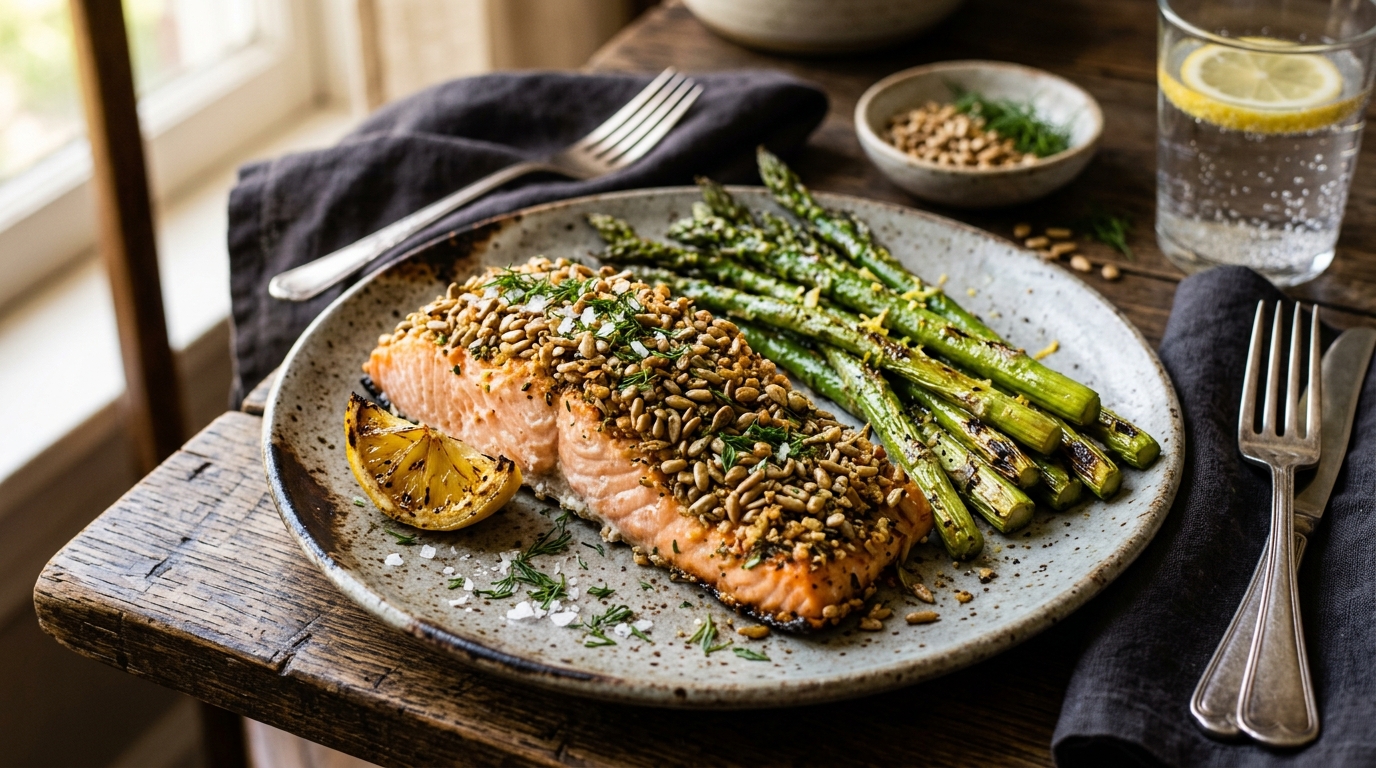
This Sunflower Seed Crusted Salmon with Roasted Asparagus delivers a contrast of textures and flavors in a nutrient-packed meal. The salmon develops a crisp, golden crust from the sunflower seed coating, while the interior stays moist and flaky. Roasted asparagus adds a tender-crisp element with earthy notes. The dish comes together quickly, making it practical for weeknights when you want a balanced meal without lengthy prep.Recipe at a Glance
- Prep time: 10 minutes
- Total time: 30 minutes
- Servings: 2
- Calories per serving: 450
- Difficulty: Beginner
Why This Recipe Works
Sunflower seeds create a crust that adheres well to salmon without breadcrumbs, keeping the dish gluten-free and adding healthy fats. Roasting asparagus alongside the fish maximizes efficiency—both cook at the same temperature and require minimal attention. The spice blend (garlic powder, paprika, salt, and pepper) enhances flavor without masking the salmon’s natural richness. This method ensures consistent results: evenly cooked fish with a crunchy topping and asparagus that’s tender but not mushy.Ingredients
Yields 2 servings.- 2 fillets salmon (skin-on or skinless, about 6 oz each)
- 1 cup raw sunflower seeds (unsalted)
- 1 tablespoon olive oil (plus extra for asparagus)
- 1 bunch asparagus (about 12 oz, woody ends trimmed)
- 1 teaspoon garlic powder
- 1 teaspoon smoked or sweet paprika
- 1 teaspoon fine sea salt
- 1 teaspoon freshly ground black pepper
Equipment
- Rimmed baking sheet (prevents oil spills)
- Medium mixing bowl
- Chef’s knife (for trimming asparagus)
- Cutting board
- Pastry brush or oil spray (for coating salmon)
Instructions
1. Preheat the oven to 400°F (200°C). Position the rack in the center for even heat distribution. Let the oven fully preheat—this ensures the asparagus roasts properly and the crust browns.2. In a mixing bowl, combine sunflower seeds, garlic powder, paprika, salt, and black pepper. Stir until the spices are evenly distributed. For a finer crust, pulse the seeds in a food processor 2–3 times before mixing.
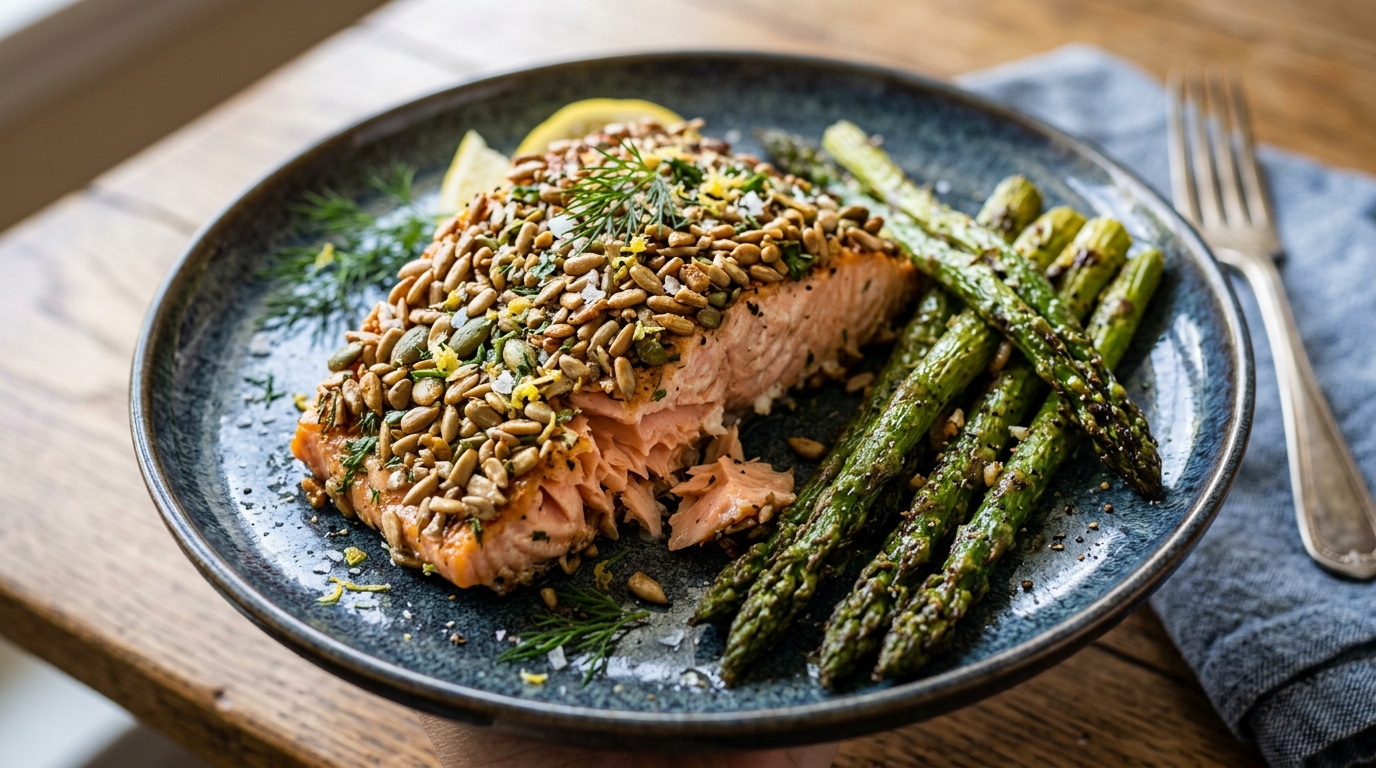
3. Pat the salmon fillets dry with a paper towel. Brush the tops lightly with olive oil—this helps the crust adhere. Press the seed mixture onto each fillet, covering the surface evenly. Use the back of a spoon to compact it slightly.
4. Place the salmon on one side of the baking sheet. Arrange the asparagus in a single layer on the other side. Drizzle the asparagus with ½ tablespoon olive oil and season lightly with salt and pepper. Keep space between the spears to allow airflow.
5. Bake for 18–20 minutes. The salmon is done when it flakes easily with a fork (internal temperature of 145°F/63°C). The asparagus should be tender but still bright green. If the seeds aren’t golden enough, broil for 1–2 minutes while watching closely to prevent burning.
Tips for Better Results
- For uniform cooking, select salmon fillets of equal thickness. If one end is much thinner, tuck it under to create even layers.
- Trim asparagus by snapping off the woody ends where they break naturally—this removes the tough portion without waste.
- Check salmon doneness by inserting a fork at the thickest part and twisting gently. It should separate into large flakes.
- If the crust isn’t sticking, brush the salmon with a thin layer of Dijon mustard before adding the seed mixture.
Variations
Spicy Version
Add ¼ teaspoon cayenne pepper or ½ teaspoon crushed red pepper flakes to the seed mixture. This pairs well with a cooling yogurt sauce.Nut-Free Alternative
Replace sunflower seeds with toasted pumpkin seeds (pepitas) for a similar crunch and added magnesium.Lemon-Herb Twist
Mix 1 teaspoon lemon zest and 1 tablespoon chopped fresh dill into the seed coating. Serve with lemon wedges for brightness.Serving and Storage
Pair with a simple quinoa pilaf or a massaged kale salad to round out the meal. For storage, let components cool completely before placing them in an airtight container. Refrigerate for up to 2 days. Reheat salmon in a 300°F (150°C) oven for 8–10 minutes to maintain texture—microwaving will soften the crust. Asparagus is best reheated in a skillet over medium heat.Nutrition Estimate
- Calories: 450
- Protein: 35g (supports muscle maintenance)
- Fat: 28g (includes heart-healthy omega-3s)
- Carbohydrates: 12g
- Fiber: 5g (from asparagus and seeds)
Frequently Asked Questions
Can I use frozen salmon?
Yes, but thaw it completely in the refrigerator first. Pat it dry thoroughly to prevent excess moisture from loosening the crust.How do I prevent the crust from falling off?
Ensure the salmon is dry before oiling, press the seeds firmly, and avoid moving the fillets once placed on the baking sheet.Can I use other vegetables?
Yes, broccoli florets or green beans work well. Adjust roasting time—broccoli may need 5 extra minutes.Is this recipe keto-friendly?
Yes, with 5g net carbs per serving, it fits most keto macros.Conclusion
This recipe balances simplicity with thoughtful technique for a meal that’s both nourishing and satisfying. The sunflower seed crust offers a modern twist on traditional baked salmon, while the roasted asparagus provides a fuss-free side. With clear instructions and adaptable variations, it’s a reliable addition to any healthy eating plan.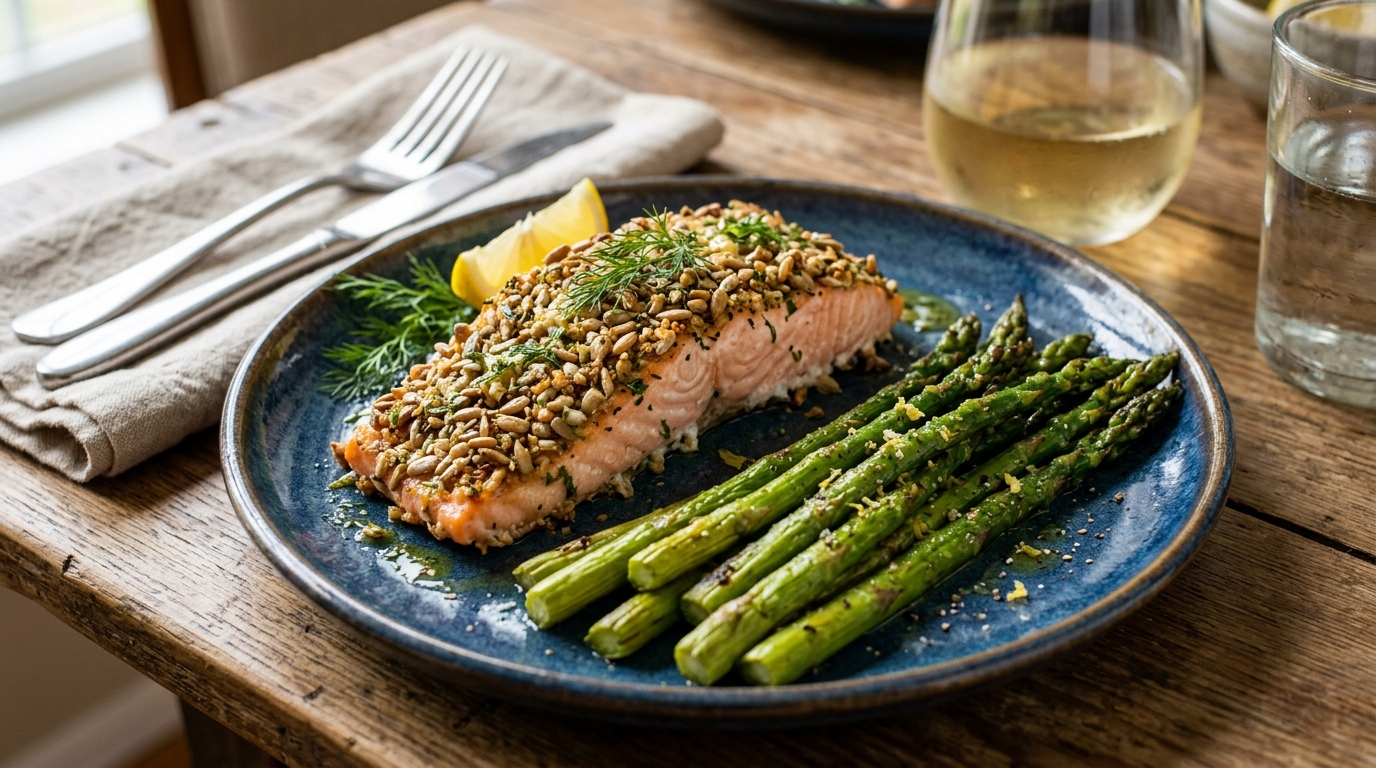
Sunflower Seed Crusted Salmon with Roasted Asparagus
Ingredients
Method
- Preheat the oven to 400°F (200°C). Tip: Ensure oven is fully preheated for even cooking.
- In a mixing bowl, combine sunflower seeds, garlic powder, paprika, salt, and black pepper. Tip: Mix well to evenly distribute the spices.
- Brush salmon fillets with olive oil, then press the sunflower seed mixture onto the top of each fillet. Tip: Press firmly to ensure the crust sticks.
- Place the salmon fillets on a baking sheet and arrange the asparagus around them. Drizzle asparagus with olive oil and season with salt and pepper. Tip: Spread asparagus evenly for even roasting.
- Bake in the preheated oven for 20 minutes, or until salmon is cooked through and asparagus is tender. Tip: Check salmon for flakiness to ensure doneness.
Conversation